
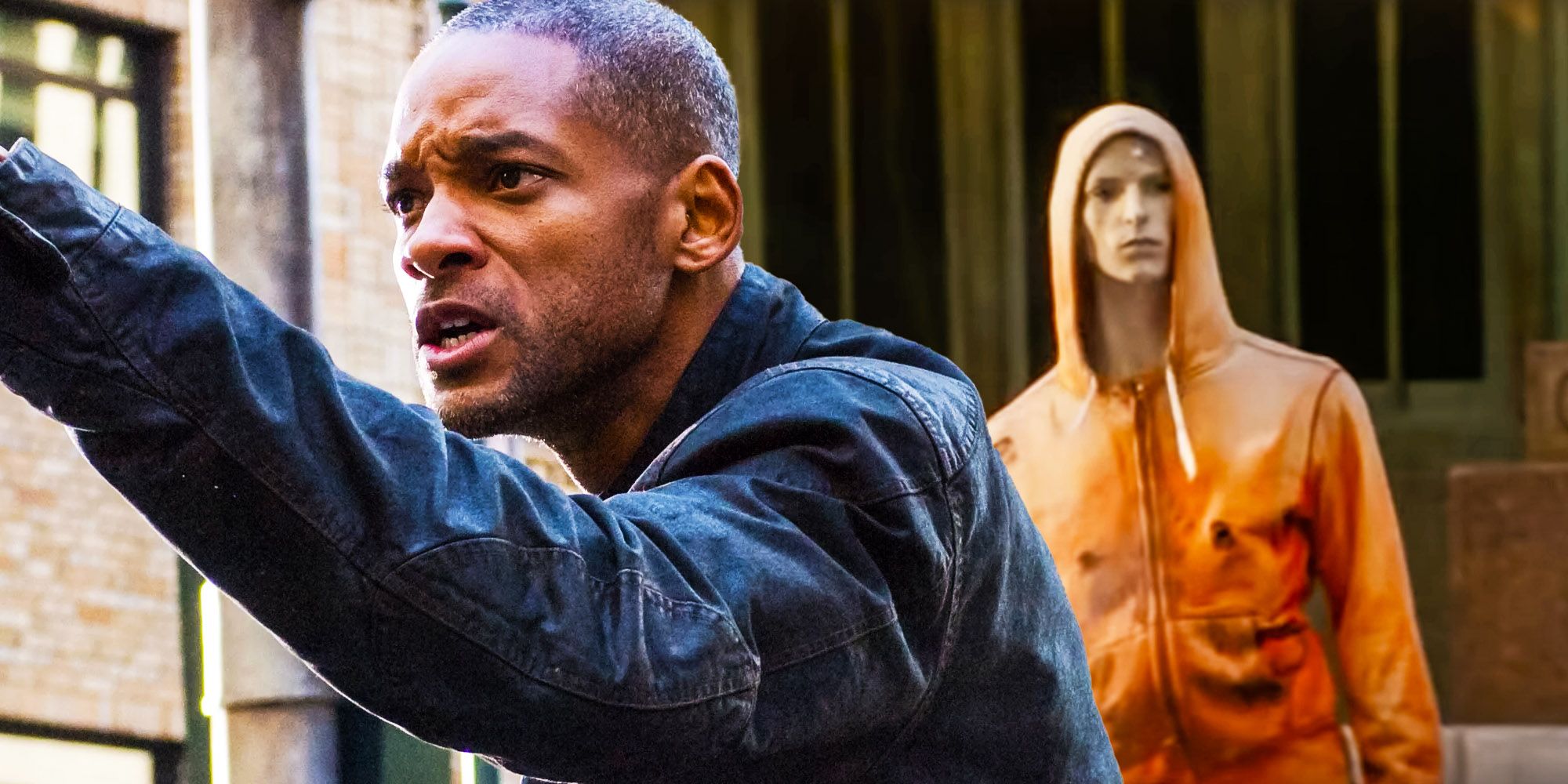
For this post, I analyzed a powerful scene from I Am Legend (starring Will Smith). I used a three-step approach: first watching the scene without audio, then listening to it without visuals, and then finally experiencing both sound and visuals together. Below I continue to go into depth through each sensory, my experience, and how each sensory was used to understand the story and how the directors used their visual and auditory skills to enhance the film.
🔇 Visual Analysis (No Audio) 🔇
Watching the scene of Will Smith’s character drive around dazed and confused that there is a mannequin standing in the middle of the street- without sound, the camera work immediately stood out. I believe the camera work still stands to the test of time as the industry continues to expand and explore motion picture. The sequence is filled with rapid cuts between close-ups, medium shots, and wide angles, all while keeping focus on Will Smith, his dog, the mannequin who is named Fred, and the desolate city. The visual story telling alone shows that there is a deep sense of isolation. As Will Smith’s character continues to become visually frustrated with Fred, he then shoots at Fred and the surrounding buildings. The camera pans and turns around him. His behavior becomes erratic, and you begin to suggest that he has gone mad. The cinematography mirrors his state of mind-quick cuts, spinning shots, his perspective shifting, giving viewers the feeling that something is truly wrong, although we do not know what it is or cannot see it.
One particular moment that caught my attention was when Smith noticed Fred standing in the street. The camera was placed inside the vehicle as he stopped, reversed, and pull the car in drive to get a closer look. Viewers are able to get a unique perspective of the mystery through the windshield. I enjoyed the match on action, various angles, and over the should shots. No matter how present the threat was, the scene was still intense and intriguing-even without audio.
🕶 Audio Analysis (No Visuals) 🕶
Listening to the scene without visuals paints a different picture. The sound design is rich and layered: the hum of the engine, screeching tires, the dog barking, the sharp pop of gunfire, and the impact of the bullets on different surfaces-plastic, concrete, metal, and glass.

You hear the taxi crash, the thud of Will Smith hitting the ground, and even the faint droplets at the end. Without visuals, the audio alone suggests that Will Smith’s character is either delusional or under extreme psychological stress. His voice echoes through space, reinforcing the idea of isolation and instability throughout the scene.
👂🏽👀 Full Scene Analysis (Audio + Visuals) 👀👂🏽
When experiencing the scene together, the audio and visuals create a fuller understanding of the scene. The tension builds as each shot and sound effect layers onto the next. The moment the taxi begins to fall off the bridge is especially astounding. A medium-close, over the shoulder shot captures Smith’s reaction as he peers over the edge, and the soundscape intensifies with the creaking of metal, the impact of flesh and bone, dripping blood, and the dog’s frantic barking.
From a Roger Ebert-esque perspective, the scene makes use of positive and negative space frequently. Smith often begins on the right (positive space) when observant, active, and engaging, and shifts to the left (negative space) during moments of reflection or conflict-sometimes internal, like when he yells at Fred and proceeds to spin in confusion after shooting him. This spatial movement subtly signals shifts in his mental state. The wide shots emphasize the vast emptiness of the city, reinforcing the idea that the threat, whether it is external or internal, is overwhelming and unknowable at this point in time.
Final Thoughts
This scene is class act in visual and auditory storytelling. Through dynamic camera work, framing and compositional attention, and layered sound design, the filmmakers convey a narrative of isolation, paranoia, and psychological tension without relying on exposition. It is a powerful reminder of how film can communicate emotion and story through technique alone.
Below, you can watch the scene – “Fred,” from I am Legend. I would like to offer you a challenge of completing the same 3-step approach to reading and understanding this scene as I did. I look forward to hearing your thoughts!
